
My essay, “Making Lesbians Visible: Recovering the Social History of the 1990s Lesbian Comics Boom,” is out in Feminist Formations 37.1.
Read the abstract below.
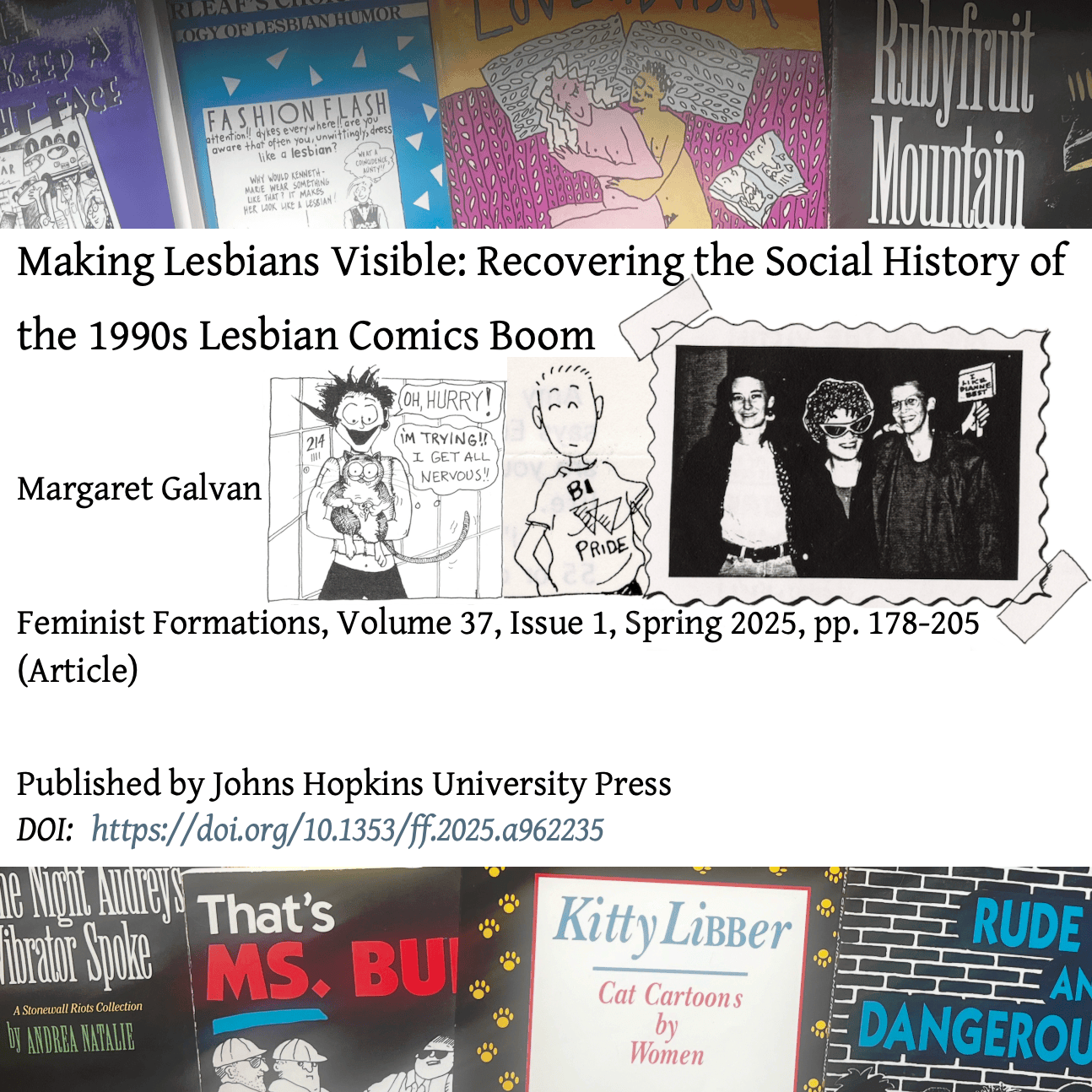
In the early 1990s, young feminists and queer individuals embraced zines,
a DIY self-publishing format with no editorial rules or restrictions, building epistolary
networks which spread the word about the riot grrrl and queercore subcultures and
formed them into internationally known movements. Paralleling but also independent
of these movements, lesbian and bisexual women cartoonists also formed a tight-knit
community through zines, expanding their publishing opportunities and facilitating an
unprecedented but little-remembered boom in lesbian comics publishing. This article
traces how zines were integral to the expansion of lesbian cartoonist voices and how
it allowed them to openly dialogue about their sexuality. As scholars of queer comics
have documented, grassroots newspapers and underground series like Wimmen’s
Comix and Gay Comix provided the foundation for lesbian cartoonists to develop
as a community across the 1980s, but limitations of page space and editorial ideology
meant that only a handful of lesbian cartoonists could really flourish and publish
with any regularity. By contrast, zines offered cartoonists unprecedented freedom
and space to publish what they wanted when they wanted. In looking closely at the
newsletters, series, and individual comics that emerged through zine networks, we
can trace how cartoonists used zines to proliferate and expand the conversation about
lesbian sexual expression and lesbian subcultures. This article includes extended
discussion of publications including Girljock, Hothead Paisan, Lana’s World,
Lesbian Cartoonists’ Network, Liliane, OH . . ., and Strange-Looking Exile.
While scholars have celebrated the likes of Alison Bechdel or Diane DiMassa for
how they documented lesbian subculture in comics, the dozens of women creating
comics in zines in this period offer up an even broader vision of lesbian sexuality and
show how necessary the community was to their success.